After finishing a figurative painting, or sometimes a series of paintings, I find that I’m not finished with them entirely.
Something remains.
It might be a color I keep thinking about, a gesture, a shape, or a small passage of paint that became interesting on its own. Sometimes it’s the surface itself — where paint has been layered, scraped away, covered, and allowed to show through again.
The abstract paintings often develop out of the figurative work. I’m usually pulling something forward from the painting I’ve just finished and seeing what remains when the figure is gone.
I don’t begin them with the same kind of plan. Without the responsibility of likeness, I can follow the paint a little more freely. A shape can stay because I like what it’s doing. A color can become more important than the thing it originally described. Marks can be covered and uncovered without needing to resolve themselves into an arm, a face, or a piece of clothing.
But they still feel connected to the same way of working.
When I paint a person, I’m looking closely, but I’m also paying attention to what the paint is doing. I notice where a brushstroke is enough, where something can stay unresolved, and where the paint begins to become interesting apart from what it is describing.
Abstraction gives me a place to follow that part of the painting process further. Sometimes it also feels like a way of clearing something out — working through what is still lingering from the paintings that came before and making room for whatever comes next.
So it’s about what gets carried forward, but also what gets left behind.
It’s about what remains.
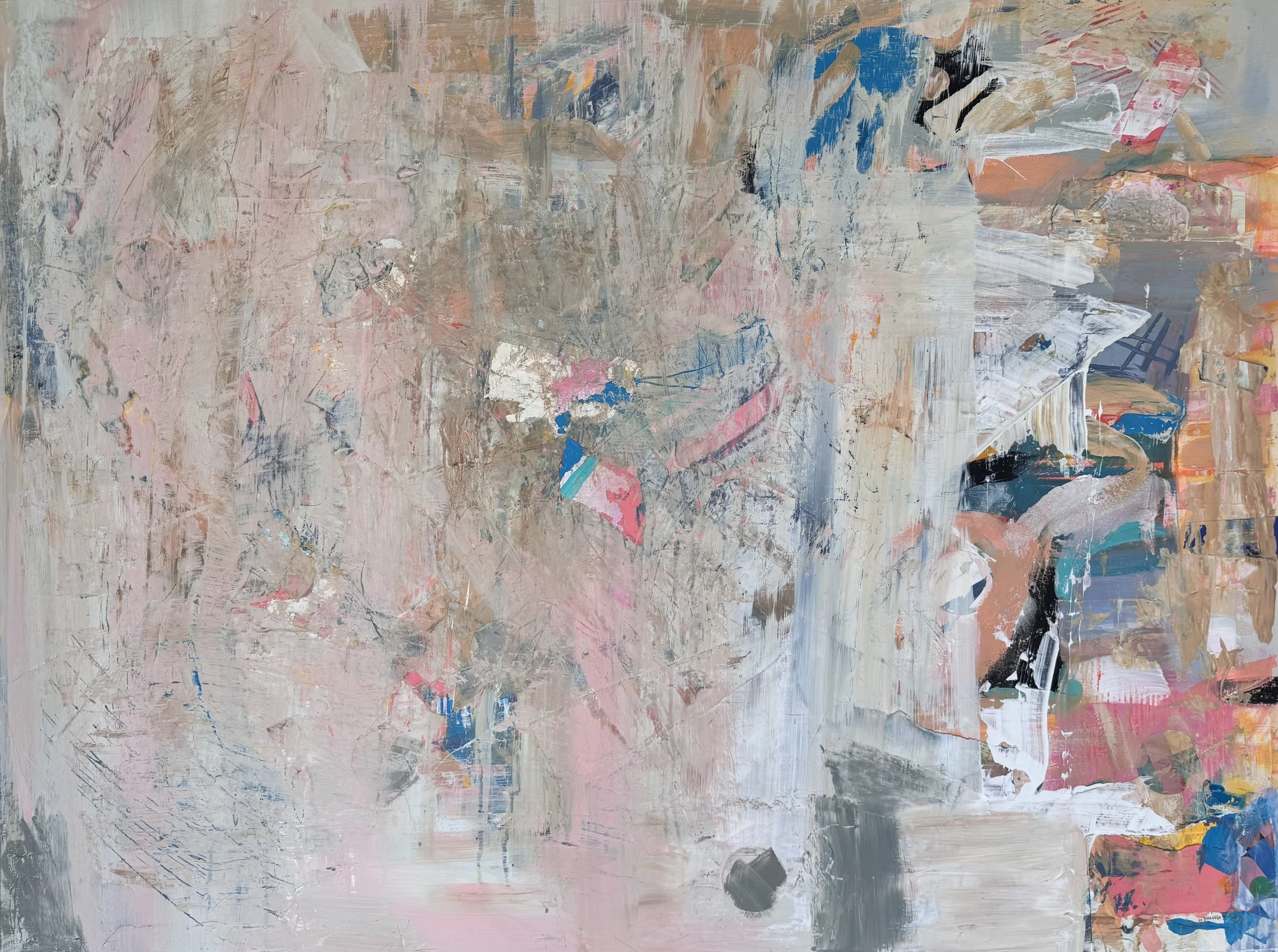
Remains, 2026
Acrylic and collage paper on cradled wood panel.
40 × 30 in.
This painting began while I was working on the commissioned portrait, Tracy, using paint and materials left from that process. I returned to it after the portrait was finished, allowing it to become a kind of clearing out— a way of working through what remained before moving on to something new.